


My mother has replaced my man in the South of France and so I have had to find an excuse to knuckle down and do something cerebral rather that simply sit by the pool and stare at lizards. What do you mean you don’t have a real job yet, she says. [My job] is a real job, I reply, and then she throws a very expensive sandal at my head. When she was my age she was running a publishing house on Fleet Street.
Anyway, I’ve returned to the real world, I have ninety unanswered emails and a martyr complex, please remind/reprimand me if I’ve been useless, etc. Thank you to everyone who came to ELLIOT JOSEPH BURR’s Antics last month, I’ll be reading again at rose lyddon’s Recitations at Pierre d'Alancaisez = Verdurin on the 25th of September.
OZYMANDIAS IN HELL, OZYMANDIAS IN ITALY
Desponsamus te, mare, in signum veri perpetuique domini
Peggy Guggenheim Collection, Venice
★★☆☆☆
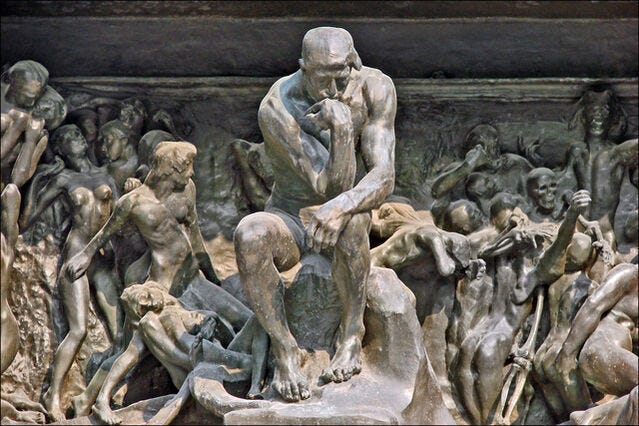
“The Thinker was originally conceived not in heroic isolation, but as part of Rodin’s monumental Gates of Hell.”
— National Gallery of Art web entry on The Thinker (Le Penseur), 1904, by Auguste Rodin
“Think, Reader, if I was discomforted
At utterance of the accursed words;
For never to return here I believed.”
— Inferno, Canto VIII
Allegedly the Italians contributed quite a lot to art history, but to confirm this one may have to speak to an Italian, possibly even a male one.1 However I was offered a room at the Danieli in exchange for some consultancy work (something I’m trying to take more seriously; if you or a loved one have a museum that’s too woke or not woke enough, whatever, please do get in contact; my rates are reasonable and my advice is verifiably good) so I’ve ended up in Venice for a few days.
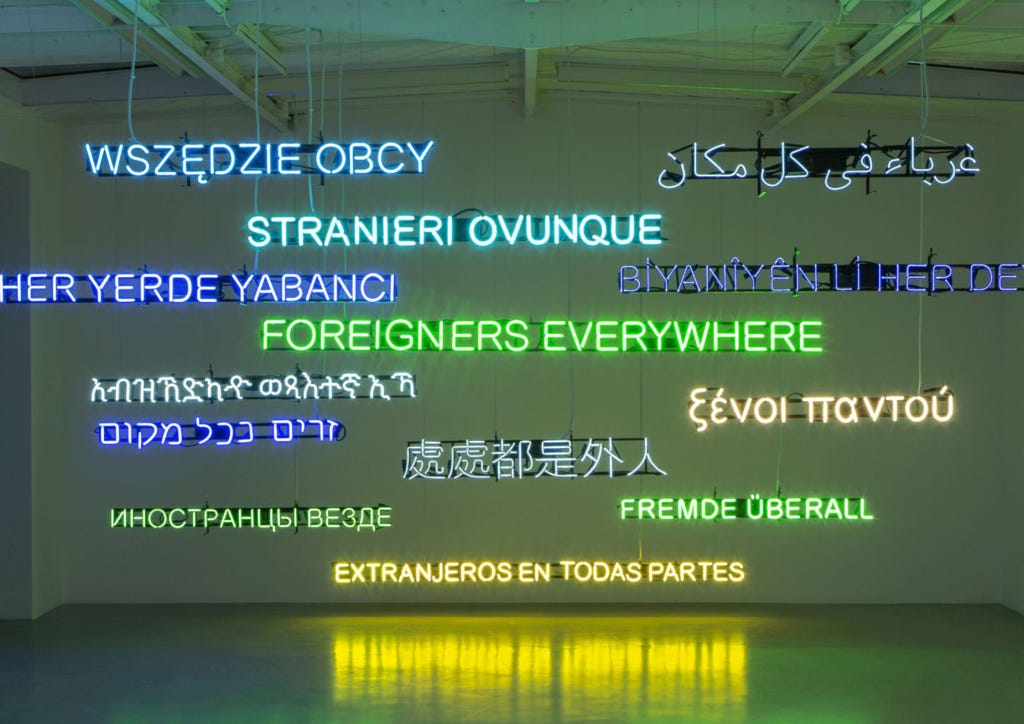
I’m allegedly here for a celebration of Peggy Guggenheim’s 127th birthday. My hotel is in the Schiavoni quarter, meaning "Slavs" in Old Italian, specifically merchants and sailors from Dalmatia (present-day Croatia and Slovenia). The last time I was in Venice was during last years’ Biennale, Foreigners Everywhere, curated by Adriano Pedrosa. I noted at the time a certain cosmic tension between this theme and the fact that Venice was founded by refugees on the date of the Annunciation: a Marian birth of a city without earth, immaculately conceived in water.2 Their empire ran on salt — salt routes, salt levies, salt warehouses — and salt itself, God’s cum, was sacred: preservative, covenantal, the “salt of the earth” that Christ exhorts his followers to be, haunted always by the Freudian tang of genesis. To imagine Venice as Mary is also to imagine her as saline: virgin, generative, suspended between conception and crystallisation. It makes sense that Peggy Guggenheim, a mother-refugee of another kind, would find her sanctuary here.
However, if we must speak of Italian exiles, then we must speak of Dante; if we must speak of Dante, then we must speak of dantismo. Zygmunt Barański critiques the long-standing cult of reception, scholarship, and public criticism of the writer as weighed down by orthodoxies and an overwhelming mass of commentary, comparing the canonised, modern image of the author to Ravennate sculptor Enrico Pazzi’s monument in Florence’s Piazza Santa Croce. He describes the statue in the first chapter of Dante, Petrarch, Boccaccio: Literature, Doctrine, Reality (2020) with the poet’s “head wreathed in a laurel crown and firmly grasping the Commedia in his right hand, (…) loom[ing] pensive and somewhat scornful as he gazes into the distance, ignoring his surroundings, left arm supporting a long swathing mantle.”
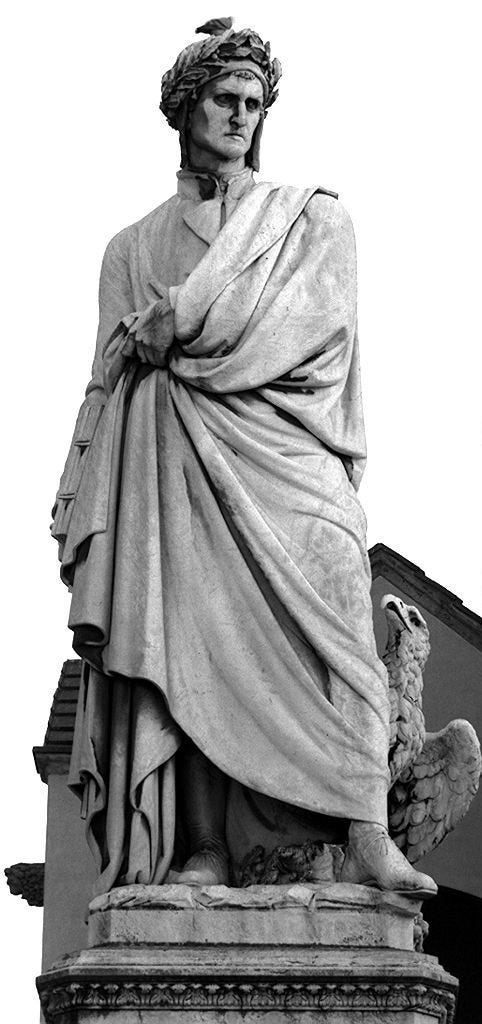
This Dante — detached, disdainful, reflexively withdrawing (from) his own work — is to Barański “not just fixed but also set apart, (…) underpinned by an irresistible and unruly mass of exegesis stretching back to the fourteenth century.” Both Pazzi and Barański’s Dante becomes a set of symbols codified by Boccaccio’s Trattatello in laude di Dante/vita: laurel, volume, mantle; hero, scribe, God.
The reason I bring this up is not because I’m a Dante scholar (I’ve only read La Commedia and the semi-autobiographical Convivio, mostly squinted at through a haze of Dunhill smoke when I was 21 and trying to convince myself that I would do well in Florence)3 but because walking around Venice has reminded me of a very fundamental Lack in contemporary (or at least post-9/11, as Hal Foster would argue) art: our inability to monumentalise.
Barański is not wrong in eliciting the image of a figure warped by retroactivism: Boccaccio’s romanticised biography (written in 1357, nearly 40 years after Dante’s death) has been the basis for the vast majority of the poet’s interpretations. From the editorial authority of Scartazzini and Vandelli to the idealist-nationalist framings of Gentile and Croce, the genteel Anglophone portraits of John Addington Symonds and Paget Toynbee to the patriotic poet-laureate of the Risorgimento, each tradition has constructed its own “permanent” version of Dante; personalised statues produced after centuries of selectively chiseling away at Boccaccio’s vita’s version of his life and history.
I’m not going to rehash the discourse about Foreigners Everywhere, but there are immediate parallels to be drawn between Pedrosa’s treatment of identity and of Dante’s editorial custodians. The codification of ego qua contemporary metonymies (Shakespeare was gay, Joan of Arc was non-binary, Martha P Johnson was trans, etc) is neither new nor interesting; Boccaccio wanted a saint while Croce wanted a revanchist; Pedrosa wants a plural Venice while Flavia Frigeri wants a martyr Guggeinheim. None of these are neutral, and none are eternal, but all are born — as Zizek notes of all restorative/reconstructionist history — of a Lacanian desire to find memetic subjecthood where there is none.
For a while now I’ve been talking about something I’m tentatively referring to as the Ozymandias Effect: an influx of artists and galleries showing work that are trying, however tacitly, to embody what we are afraid will be lost in the face of Antioch; annihilation via nuclear war, climate change, governmental suppression, AI apocalypse, all the good stuff we like to pretend is going to happen rather than worrying about traffic lights or the homeless.
As the concept of dantismo and last year’s Biennale proves, the vast majority of art is a reaction to and not a reflection of contemporary anxieties (no art has produced a revolution, but revolutions produce the best art). This is what we actually mean when we rally around the cry of ‘All Art Is Political’: not that all/any art directly engages or even challenges actual societal structures, but that it tells us something about the socio-economic realities of its creators and audiences. All art, regardless of authorial intention, tells us what materials are available, what restrictions are respected, what censorships are rebuffed, what languages are are expected of their audience. What we have difficulty coming to terms with is that to the future custodian of culture, the text on the back of my toilet bleach will do all of this just as serviceably as a Kaws sculpture.4
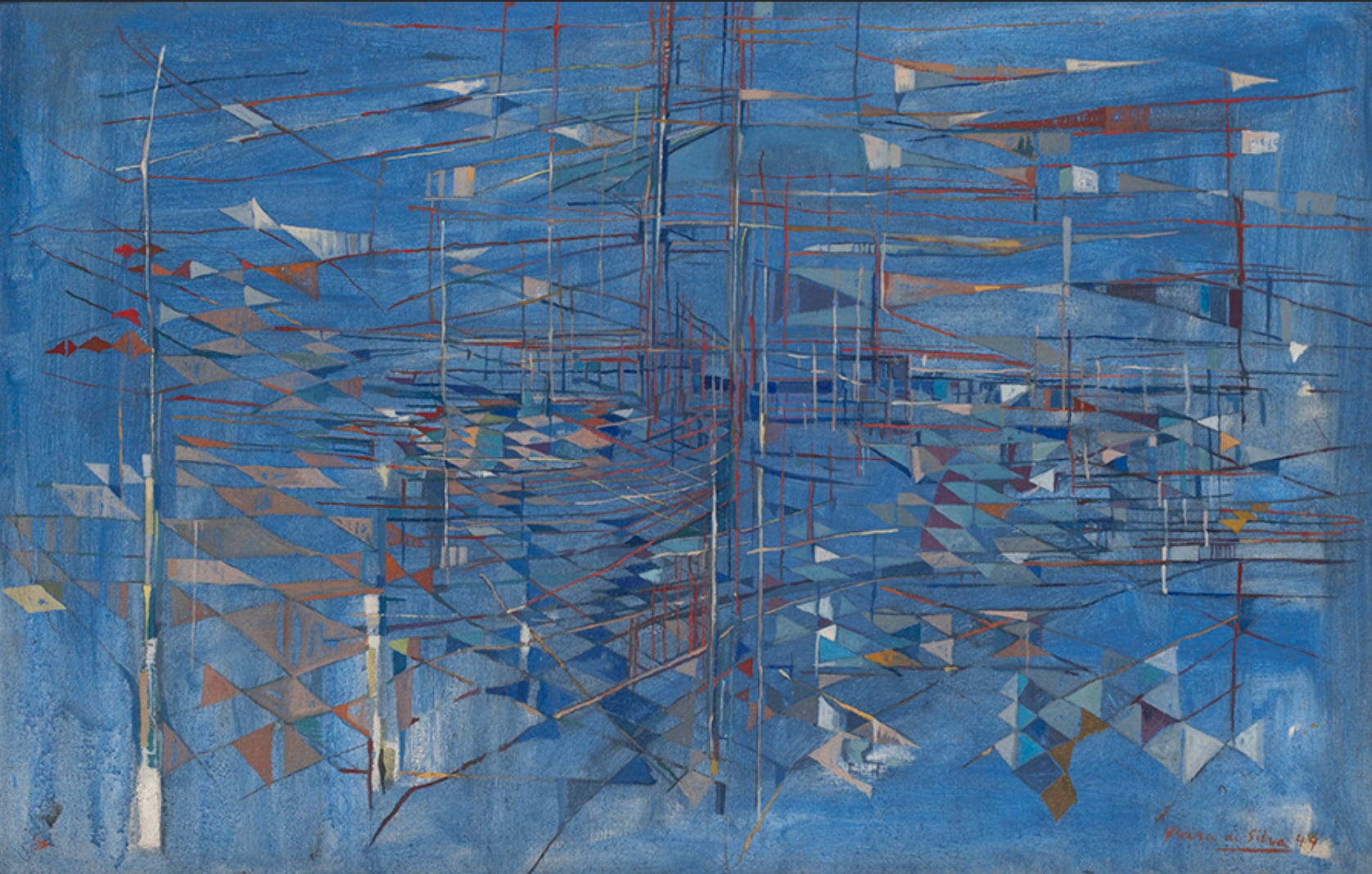
Like beasts we seek always to mark territory, unlike them we understand the passage of time. This is the primary function of all literature, all art: to piss in the sand hard and well enough to say I was here (and) this is what I wanted (and) this is what didn’t want me to. Venetian merchants smuggled the the body of St Mark out of Alexandria under layers of pork so the Muslim inspectors wouldn’t touch it. The desired repositioning of man above animal, above death, is as evident as it was in Dante and Boccaccio as it is at the Biennale and Guggenheim. Please remember us, say Saville and Dali and da Silva, please remember we were good, please let my mother’s sandals survive the sands that consumed the King of Kings.
BLASPHEMERS, SODOMITES & MONEYLENDERS
Non fer mai drappi Tartari né Turchi— oddio, il gatto è un neoliberista
Ghazaleh Avarzamani and Ali Ahadi, Freudian Typo @ Hayward Gallery
★★★★☆
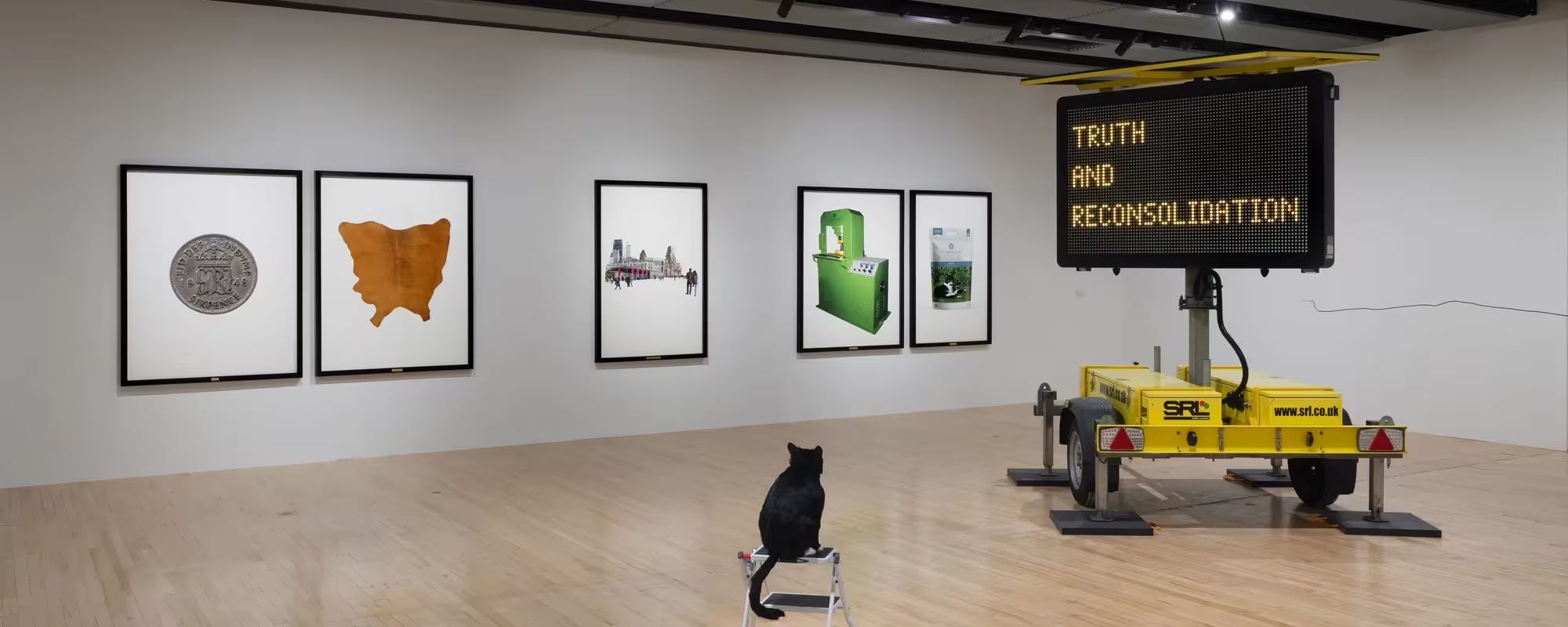
“Economy… is not simply about not spending money. [It is] the judgment which sensible men make of the wants of the moment, and of the best means of satisfying those wants at the least expense and with the greatest efficiency.”
— Palmerstone, Commons and Lords Hansard of August 1862
“A wiser man than you,
For in his teaching has separated
The intellect potential from the soul,
Because he could not find its proper seat.”
— Inferno, Canto XXV
Sadly this show will be over by the time this reviewdump comes out, but I’m mentioning it because a) it’s very good and b) it touches directly on the problem I’ve been circling: how we navigate the mare magnum of Dante criticism and, by extension, the mare magnum of contemporary art. The tenuous but (as I’m sure you’ll agree) totally genius through line I’m attempting to thread through the needle of my second pint of Asahi is the clash between intellect and affection, reason and emotion, taxonomy and play, the subjectiveness of economy and the objectiveness of art.
Avarzami and Ahadi’s collaboration is concise, humorous, extremely well-curated. There is a natural spatial manoeuvre from left to right, appropriate for a show about the English language, which when combined with use of Enlightenment labelling conventions is an extremely funny and Sapir–Whorfian way of exploring how the English tongue is knotted up with the vocabulary of finance and the development of the debtor/creditor relation. Nietzsche speaks of this in On the Genealogy of Morality, arguing that morality and guilt (schuld in German) are rooted in the same word as debt, as does Maurizio Lazzarato in The Making of the Indebted Man, arguing that that modern subjectivity is fundamentally debt-based; anchored by English as global lingua franca of finance as a mirror of globalised neoliberal control. The word “capital” itself comes from caput, Latin for head, linking money to livestock-counting, “redemption” means both buying back a bond and being saved from sin, “obligation” is both moral duty and financial liability.
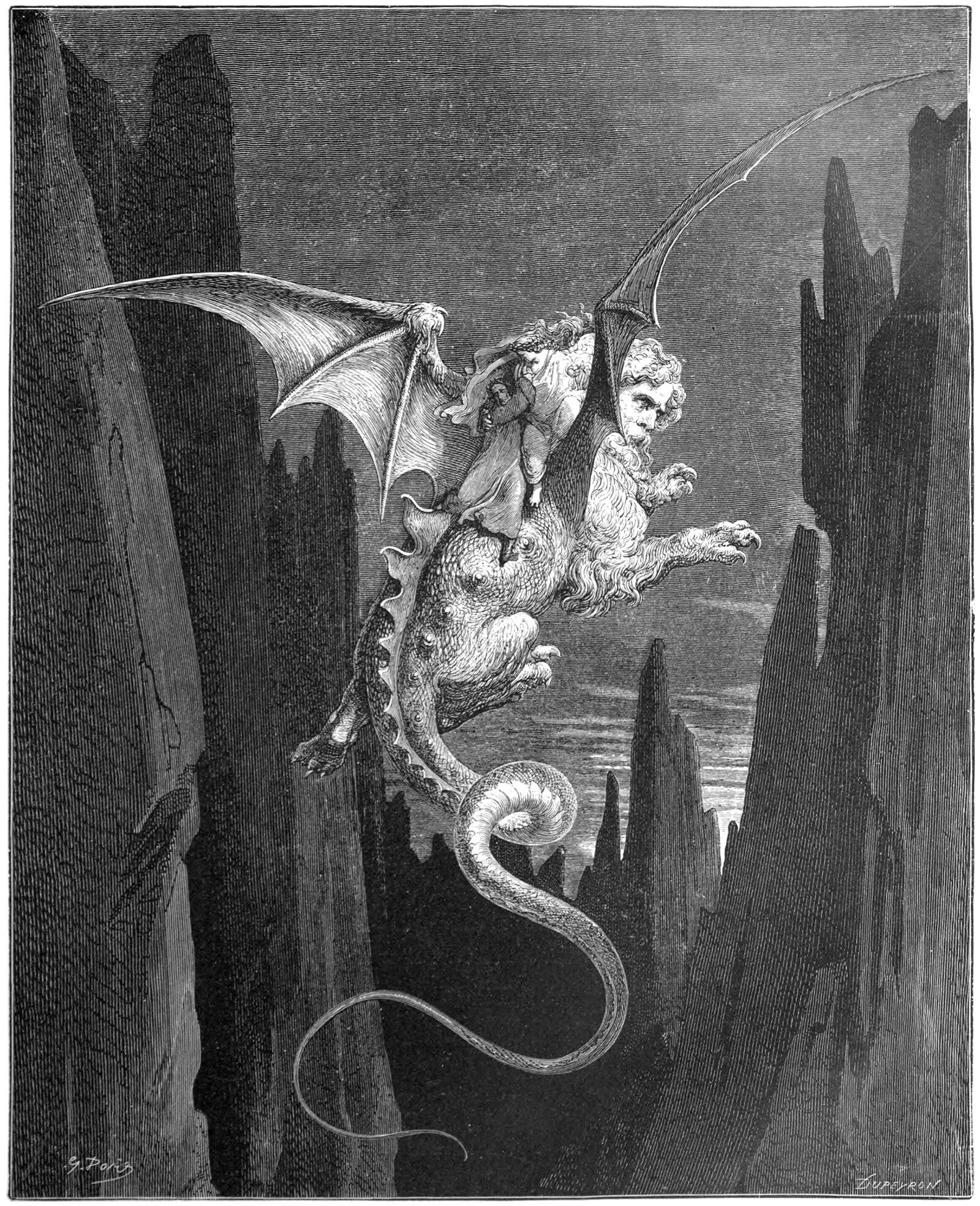
Dante, of course, already knew where to put the financiers. In Inferno XVII he casts the usurers into the seventh Circle garlanded by grotesque parodies of heraldry, usually of Florentine families he didn’t like: E com’ io riguardando tra lor vegno, in una borsa gialla vidi azzurro che d’un leone avea faccia e contegno.5 Usurers (moneylenders) are kept beneath the monster Geryon, allegory for Fraud itself, a beast with an honest man’s face atop a serpent’s body and scorpion’s tail. To Dante, usury was not just a crime against neighbour but a violence against Art and the divine order that should govern labour, craft, and creation:
“Arte, come tu sai, è quasi nipote
a Dio, e segue, come ’l maestro insegna,
di lui; e però che l’arte si conduce
a Dio, ne parli io, e non più segno.”
“Art, as you know, is the grandchild of God;
by Art, and Nature’s means, man ought to thrive.
But usurers take another road:
they scorn Nature in herself and her follower, Art,
and place their hope in something else.”
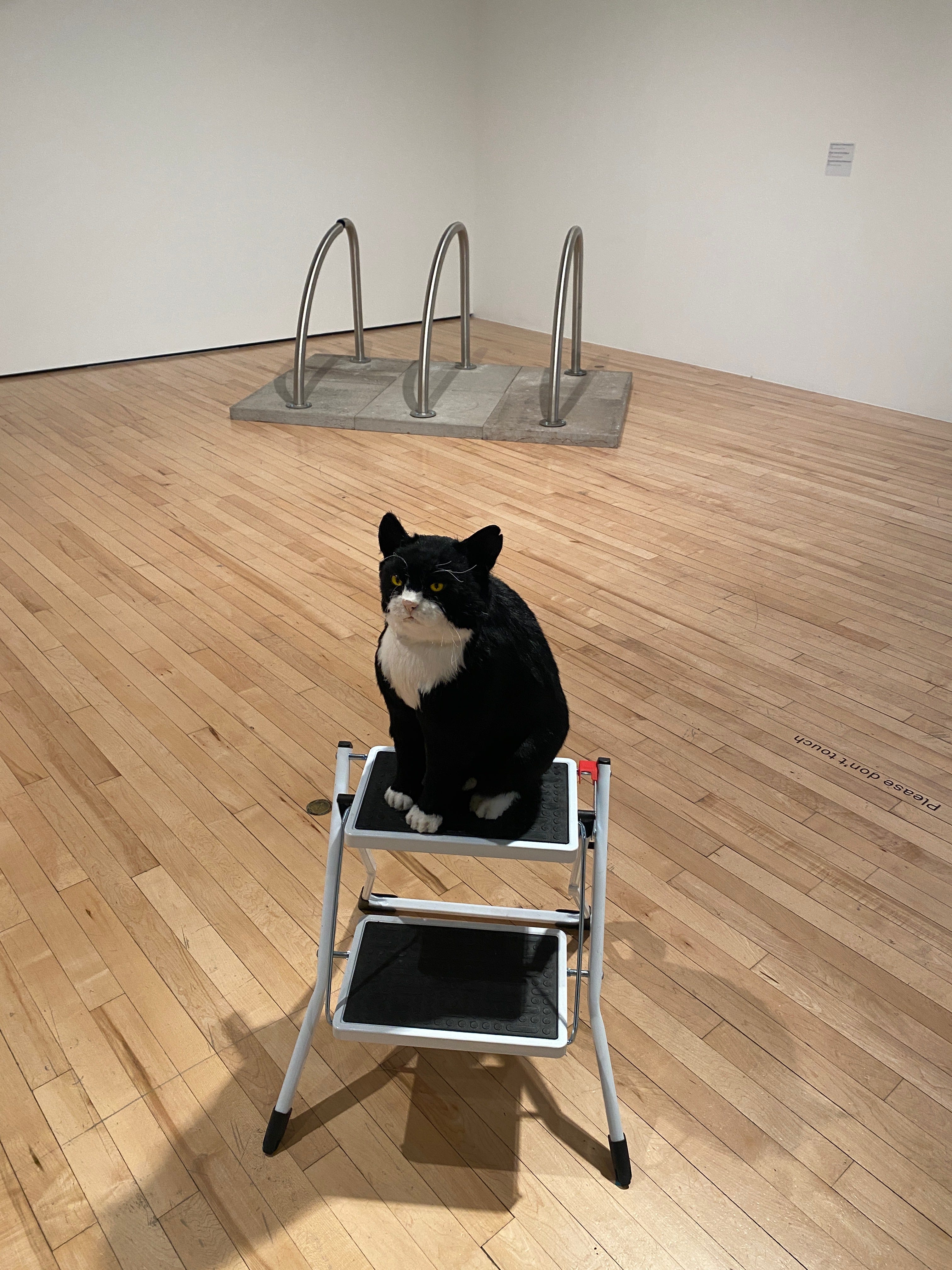
At the centre of Freudian Typo sits Britain’s own Geryon, a hyper-realistic sculpture of Palmerston, the Foreign Office’s late Chief Mouser cat, staring at an electronic motorway sign announcing Truth and Reconsolidation. It begins with the rhyme of The Old Woman and Her Pig, itself a chain of deferred obligations, a miniature economy of delay, dependence, and transaction, then proceeds through five accumulative large works — nursery rhyme, coin, hide, stock exchange, mint, cat — and from there the wall-painted line snakes toward catastrophe. A CRT monitor shows a building collapsing in ultra-slow motion (the suggestion of the Twin Towers is hard to miss) and beside it, an enlarged Monopoly-style board piece for the EBRD on Bank Street. The trail ends with six slabs of flat concrete, pierced with three bicycle racks. It is funny and bleak in equal measure: reason masquerading as affect, affection undone by bureaucracy, no ascent to beatitude, only a stock graph plunging into ruin.
This is where the Dante parallel closes the loop. The question of whether the climax of worship — or of art, of money, the ultimate, ejaculative veneration of God and/or the Gallerist — is achieved by what Aquinas called voluntas (affection, the spontaneity of delight) or intellectus (intellect, the science of classification) is literalised in Freudian Typo: rational taxonomies (finance, bureaucracy, institutional “truth”) collide with the irrational slips of nursery rhyme, typo, humour, play. This haunts Bonaventure just as Baranski’s account of the pensier contemplativi; how do we know God, asks the final canto of Paradisio, when we finally reach the end of Jacob’s Ladder and reach the Fixed Stars?6 Do we meet Him in su l’ultima spera through an appetite for knowledge or delight? What does it mean to seek the peak of a graph that will never end, to pursue limited language in limitless maths?
The theological question persists, although the medium has shifted. Where Aquinas argued that eternal life is achieved via ‘an act of the intellect’ and Bonaventure argued for ‘all intellectual operations to be relinquished (…) for the height of affection to be totally transferred and transformed into God’, today we outsource the climax to capital and quite loudly proclaim the answer is MONEY PLLLLEAAAASEEEE. The affective desire to be adored qua immortalisation is real — otherwise neither galleries nor the internet would exist — but the form has been captured by other institutions. Freudian Typo restages this imago dei of the Beatific Vision; Jacob’s Ladder rising through Saturn to the Fixed Stars transformed into a ticker line descending to the third ring of the seventh circle.
SOHO READINGS SERIES, ON THE RAG, THE REDEATH OF NEO-PASSÉISM
It begins, as all empires end, with a celebration
When I read the article in British Vogue from the gal who failed to get laid at SRS I was massively tempted to call it a skill issue; I got laid so well from my first attendance that I got a relationship and a new kink out of the affair, but when I googled what she looked like I felt it would be too mean. Anyway, there is little to say about SRS that hasn’t been said by Megan🦢 and ❦ sonny essendine, these are fun social events with good writers and excellent readers (skills not always found in the same body) MC’d by the manically charming Tom Willis, whose talent for keeping a crowd in line may yet serve well at Dealey Plaza.
There were some real heavy hitters this time. Francesca Wade opened the evening with an excerpt from her book on Gertrude Stein that was, simply put, Good Art Writing; I spend so much of my life trawling through bad press releases that sometimes I forget how nice it is to read/listen to descriptive prose of art (even if it is of Picasso). Orlando Reade’s short story about “retroactive jealousy” (a totally valid condition, 20,000 strong on Reddit) was quotably funny, Susie Boyt’s estranged mother-daughter picnic was tenderly distressing, John-Baptiste Oduor’s story was slow to start but had some of the strongest final sentences.
Coleridge argued in Biographia Literaria that the best poetry could survive paraphrase as prose; Andrew Durbin’s work could very well have been written as prose, or perhaps not at all. On dit que lorsque les bons Américains meurent, ils vont à Paris. The poem about angels was breathtakingly good, the others I could take or leave.
The crowning jewel, and accidental axis of my weekend, was Stephahie Wambugu (Lonely Crowds available on Amazon now; Mr Falcon answer your Instagram I still have your copy in my bag). Her reading at SRS was an exceptionally nimble restaging of the exhausting “here’s what it’s like to date in your thirties in the big city” genre; wherein the protagonist starts betting baptised at various churches in order to pick up women. I was reminded of the early scenes in Fight Club where the narrator begins regularly attending cancer support groups in hope of resolving a surplus-jouissance in the other’s suffering; the support group, like the church in Steph’s piece, becomes a mise-en-scène of the objet petit a of sex, where the subject tries to patch over their lack with someone else’s. The fact that, as Lacan says, “desire full stop is always the desire of the Other” is a fact woefully missed by the vast majority of autofiction about dating/relationships but not by Wambugu, who leans directly into it.
I call Wambugu the axis of my weekend because her next reading was at the On The Rag launch party, organised by the equally charming Sammy Loren of Casual Encounterz. CA is likely the reason for Soho Reading Series’ existence; if one were to trace the renaissance of the live reading scene back to anything Loren’s endeavours in LA would be a good place to start. On The Rag takes the intellectual and aesthetic format of a very British invention — the celebrity rag — and combines it with the internet’s basest collective pleasure: anonymous gossip forums. Loren opened the evening with a reading of one such anonymous submission which described the forum’s founder as a ‘complete prick’ — the joke, of course, being that he was reading his own review.
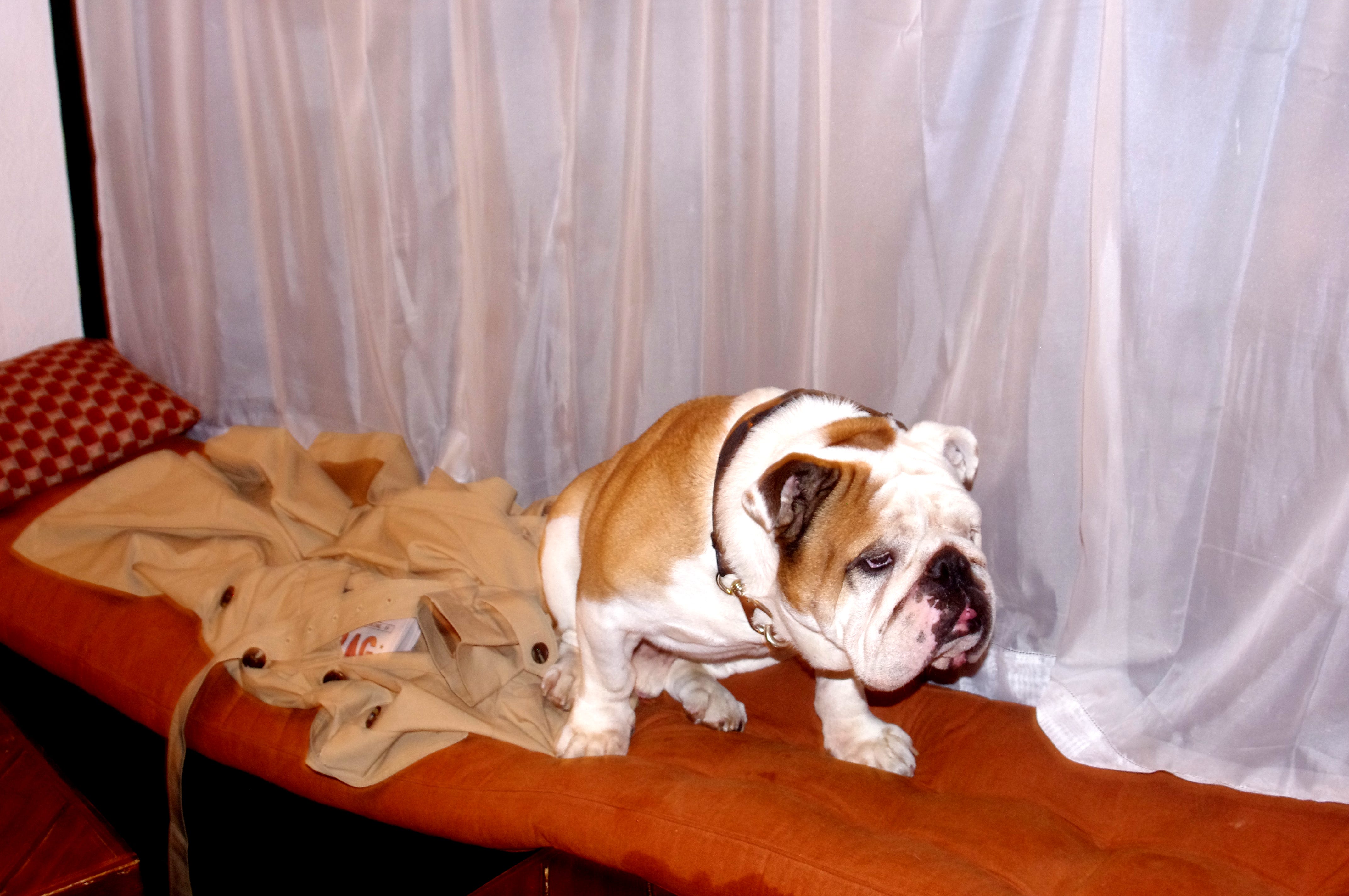
I’m afraid I missed the first few readings (sadly including Holly Connolly’s, who wrote a very good piece for the Paris Review about divorce a few years ago that I think about whenever I find one of ex-husband’s things knocking about my apartment) because Beasy’s (one of the few Soho establishments still manned by bone fide DILFs) was so full that I was driven outside to stand in the street with Phillipa Horan’s rottweiler (picture above). I managed to squeeze back through (dog in tow) in time for Zoe Guttenplan (excellent reader), Matthew Sterling Benson-Strohmayer (more gorgeous men on tables please), and Yelena Zhelezov and Ed Luker (whose pieces both flirted with the now-standard libidinal exhibitionism of autofiction, but pulled it off with just enough restraint to feel earned rather than expected). Wambugu finished the evening off by keeping to her theme of refracted religion and relationships, this time about a New York friend setting her up with an allegory of God/Jesus.


A lot of the discourse-complaints about these sorts of events, both here and overseas, tends to revolve around the idea that it becomes very onanistic (or, to borrow Essendine’s term, Hapsburgian) very quickly. Put a punch of young horny people in a room and they will all eventually end up writing about being young and horny, which I am painfully aware of as I, too, am writing about writing about being young and horny. Live readings always reveal the split subject of literature: the text on the page (silent, private, yours) versus the voice in the room (public, communal, leaking Bakhtinian dialogism). Sometimes good writers are bad readers and vice versa, but either way the event always tips writing into the theatre of being-seen-versus-seeing, being-read-versus-reading. The libidinal economy of this is precisely what Steven Craig Hickman diagnoses in Neo-Decadence and the the corpse of Neo-Passéism: retrophilic necrophagia of the likes of Ronald Firbank, Iain Sinclair, Derek Jarman, Angela Carter, Ann Quin, B.S. Johnson, the “prize-ceremony cathedrals of London”, the careful reassurance that “literature is alive because the corpse still twitches.”
Last week I was chatting to a London artworld persona who has recently agreed to start hosting live readings at their establishment. “This is simply the way things are going,” they say, somewhere between resignation and woe. “But I suppose it’s a good thing, as long as the quality is kept high.” A pause, a sip. Then, almost as an afterthought: “Of course, [the organiser] and I may not entirely agree on what counts as quality.” They look at me pointedly, having just read the piece I planned to present at the next event.
I don’t want to say that what we’re witnessing is another libidinal leak in literature’s long death-rattle, because a) it would admitting I’m part of the problem and b) it really is all tremendously good fun and ran by lovely people, but this is likely the point. What the reader-audience must now decide, I suppose, is whether “ruthlessly assert[ing] the Platonic core of ethical violence” in regards to Making Literature Great Again is worth missing out on getting laid — or, at the very least, writing about getting laid.
FINAL THOTS
Full Frontal Theatre have produced one of the funniest ‘reviews of reviews’ in living memory. I include a link here. The show in question, Rodney Black: Who Cares? It’s Working! is one of the only plays I’ve seen this year (possibly since 2017) that manages to tackle and interrogate the premise of gender and freedom of speech in art and the culture wars with any humour, elegance or intelligence, of which it has all three of in abundance. Go see it, you’ll love it, or you won’t, who cares etc. It’s on at the Arcola in early September.
Tabish Khan has predictably joined the War On Artspeak on the side that posits that most art writing is bad because most art writers are bad, and not because most art is bad. Why choose "liminal" over "in-between," "palimpsest" over "layered"?, he writes for Maxwell Museums, Why throw around "ontological," "praxis," and "phenomenology"? yes Tabs, in fact, why use any words at all, as they all mean the same thing, no word is different from another and every word in interchangeable with the next, even the long frightening ones that the CIA invented in 1957, which as we all know are the sole barrier between poor people and 10,000 euro paintings. The only good press release ever written was the thesaurus.
Some more things we should be importing from the American literary scene:
finger clicking instead of applause
fist bumps instead of handshakes, cheek kisses, oral sex
smoking Parliaments even when you’re not stone broke
skipping over multiple pages of your work
hand-writing your fiction
one single gin and tonic, payed for by a beautiful lesbian
Obligatory note that this is me being facetious, I adore Italians, but the British have never quite recovered from our envy of the Grand Tour. If I was an eighteenth century noblewoman, which I am at heart, by God I would have been seething. What do you mean, all our young eligible bachelors are fucking off during my most fertile years to look at your superior artworks in the sun. What do you mean Henry Boggins the Third won’t marry me because he’s settled in with a lithe Florentine catamite. babe come back we have Canaletto at home (it’s, uh, Thomas Malton Jr.)
Which makes Venice an Aries.
I did end up living there very briefly when I was in my mid twenties for my Art Market Masters, only to rapidly discover that when I speak Italian most Florentines assume that I am French, and therefore returned quite rapidly to London. E molto piu sicuro essere temuto che amato indeed.
One of the exercises I run in my critical thinking courses is asking groups of (usually hungover) twenty-somethings to draw a star and a moon, and then telling them to compare it to the person next to them. That is the only instruction I give, and I give them two minutes to do it. Sometimes they draw the things on a napkin, sometimes on an iPad, sometimes the star is on the left, sometimes the moon is a half crescent. The point I make once this is finished is that despite these differences they are all nominally depictions of the same thing, made at the same time, for the same reason. This is the core of all history; to quote DeLillo: the angle at which realities meet.
Here, the yellow lion on blue background refers to the Gianfigliazzi, but nearby in the same canto Dante also alludes to the Scrovegni of Padua (Enrico Scrovegni, notorious usurer, who later commissioned the Arena Chapel to try and redeem his name) and the Obriachi (Florentine usurers, their arms were azure disks on gold).
The allegory of Jacob’s Ladder was, in many ways, an early version of the Nothing Ever Happens chudjack. We never got to the end of it, we just pushed it on its side. The untenability of the Fixed Stars is the Medieval version of Brickman and Campbell’s hedonic treadmill. We taught men to fish, we gave women dishwashers and jobs, and Christ knows we’re still miserable.
I was going to ask a boomer question of what advanced technology you used so that when you click on the link for 'finger clicking' it goes to the exact bit in the video where the doggies are finger clicking but now I think I've realised that the Matrix hack is going (=40s) at the end
Thanks for the mention, even if I'm not sure if it's complimentary or insulting. Must be the language ;).